

With wrappers extinction, regulatory is the only AI moat left
Private markets have accepted what secondary clearing flows signaled two years ago: horizontal AI wrappers are dead.
During the recent “SaaSpocalypse“, capital took heavy write-downs on the copywriting bots and general productivity tools that previously commanded 50x revenue multiples. Jasper AI serves as the primary autopsy. In 2022, it raised $125M at a $1.5B valuation to generate marketing copy. By 2024, ChatGPT commoditized its core product, and Jasper’s revenue collapsed by 54%.
Lesson learned: a user interface sitting atop an OpenAI API is a feature. One foundation model update renders its cap table obsolete.
Institutional capital has reallocated. The intelligence layer is commoditizing, leaving the execution layer as the $2.9T prize. In this environment, a firm’s competitive advantage is its legal department.
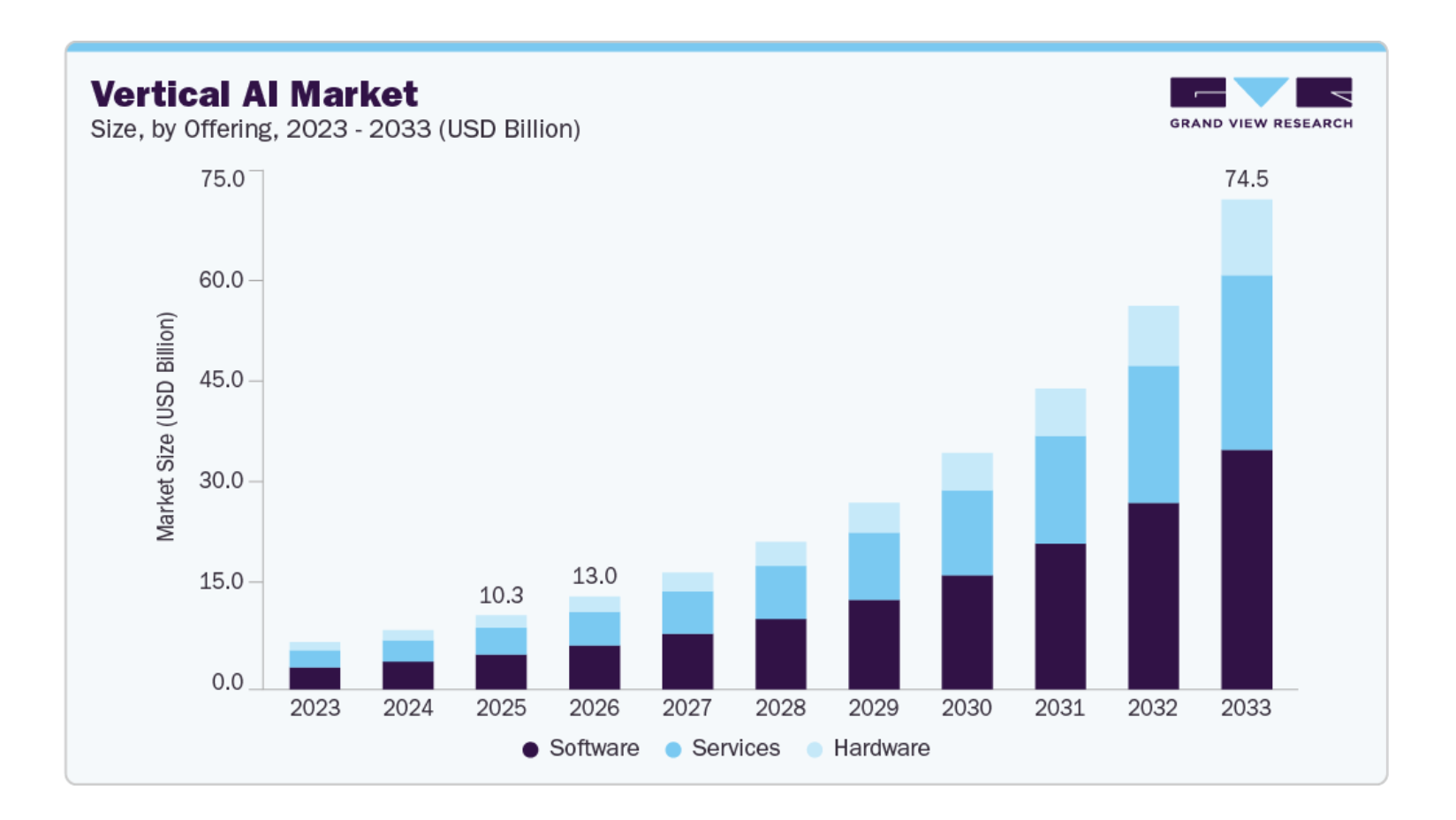
Liquidity now concentrates in vertical AI, accounting for 63.5% of all AI venture deal value in Europe in 2025. Globally, Grand View Research projects the vertical AI market to reach $74.5B by 2033, driven by autonomous agents executing multi-step workflows.
Workflow grit and cornered data
Foundation models expand horizontally, absorbing general workflows natively and commoditizing third-party software. To survive, startups must out-comply frontier models backed by hyperscaler capital.
Frontier labs demand a clean scale. They avoid the mess of legacy integrations, edge cases, and human approval loops. Sapphire Ventures categorizes this friction as “workflow grit” — and it acts as a natural deterrent to Silicon Valley giants.
Frontier models possess broad data; they know how most enterprises operate in theory. Vertical AI relies on cornered data, capturing the deep operational memory of why a specific enterprise overrides standard processes in practice.
Across the Vertical AI landscape, unicorn-valuation companies weaponize this grit and cornered data to conquer chosen domains.
In the legal sector, Harvey built infrastructure that securely ingests confidential M&A, litigation, and due diligence data. The firm raised $200M at an $11B valuation in early 2026. Corporate legal departments at Comcast and Verizon deploy these agents because OpenAI lacks the AmLaw 100 architecture to process their data. OpenAI understands this barrier better than anyone: they led Harvey’s seed round in 2022 as a strategic hedge against their own horizontal limitations. The friction is the product. The unit economics work: when electric mobility firm Shahin deployed Luminance to automate its contracts, it eradicated 90% of its external counsel costs, turning a 20,000 AED monthly legal expense into an annual one.
Healthcare and biopharma mirror this trajectory. Clinical documentation platforms like Abridge reached a $5.3B valuation, while “chatGPT for doctors” OpenEvidence crossed $12B. They justify these valuations through entirely different, though equally defensible data silos that eliminate open-web hallucinations. OpenEvidence trains exclusively on peer-reviewed medical literature, while Abridge built its ambient clinical scribe by training directly on real-world doctor-patient conversations.
In drug discovery, PathAI transformed FDA compliance into core infrastructure, creating a virtuous cycle of pathologist feedback. Today, 90% of the top 15 biopharma companies rely on their platform, and the company is eyeing $1B buyout by Roche.
Even in physical deployments like robotics, compliance dictates the winners. Figure AI and Physical Intelligence command multi-billion-dollar valuations because factory deployments require spatial training data and industrial safety certifications.
In education, platforms scale by securing FERPA and COPPA certifications, guaranteeing school boards that student data remains isolated from public training runs.
Institutional data compliance is the asset.
And capital concentration favors players who monetize this friction:
| Vertical | Notable Players | Specific Moat | Company Valuation (2025/2026) |
|---|---|---|---|
| Legal | Harvey, Luminance |
|
Harvey: $11 Billion |
| Healthcare | Hippocratic AI, Abridge |
|
Abridge: $5.3 Billion Hippocratic: $3.5 Billion |
| Defense | Shield AI, Anduril |
|
Anduril: $61 Billion Shield AI: $12.7 Billion |
| PropTech | EliseAI, Prophia |
|
EliseAI: $2.2 Billion |
| FinServ | Salient |
|
Private |
The goldilocks TAM: pricing the labor budget
Tourists routinely misprice these vertical companies by measuring the Total Addressable Market (TAM) through legacy software budgets. Smart capital prices vertical AI by the labor budget it replaces.
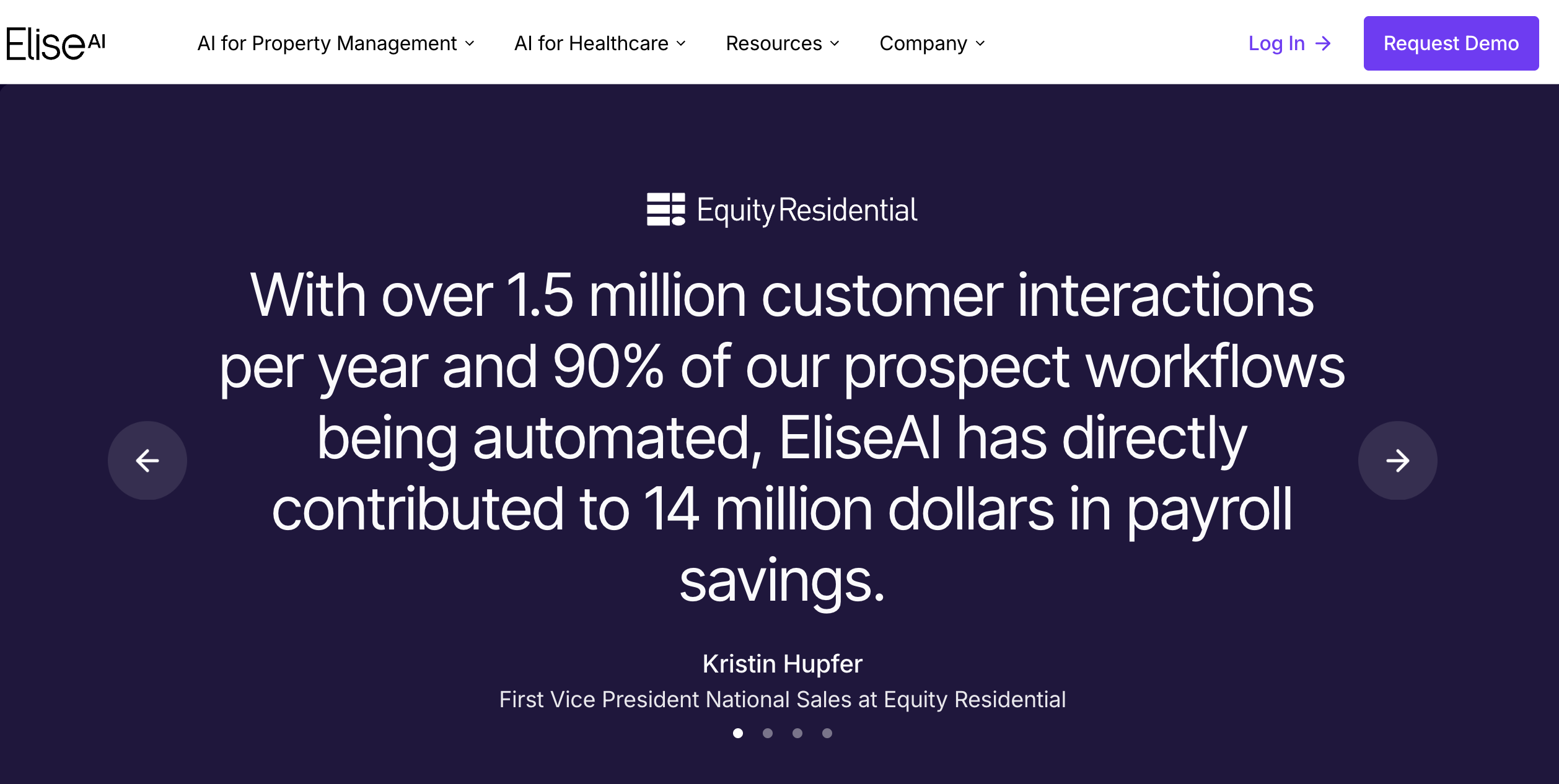
EliseAI, a property management automation company, entered the market via leasing workflows. Once integrated, it expanded to maintenance and collections, accessing multi-million-dollar budgets and taking over operations for one in six U.S. apartments.
When a vertical system shifts from assisting work to executing it, the vendor accesses the entire operational payroll.
This “Goldilocks TAM” appears too small to attract hyperscalers, allowing vertical AIs to compound a head start before the broader market realizes the true size of the prize. Furthermore, systems arriving “ready to play” allow SMBs to deploy niche digital labor without hiring expensive engineering teams.
The fiduciary floor
As vertical AI handles greater complexity, adjacent domains inevitably merge. An agent executing fund formation navigates SEC regulations and legal compliance simultaneously. Firms mastering these regulatory intersections will dominate the next cycle, pushing the requirement for regulatory armor even higher.
Firms mastering the intersections of regulations and compliances will dominate the next cycle.
This brings us to the ultimate moat: federal liability and national security.
AI for auto-lending sounds niche until you realize voice agents like Salient must navigate FDCPA, TCPA, and Reg F laws across 50 states. A single hallucination here can trigger federal regulatory action. Anyone can write a matching algorithm over a weekend. But procuring an SEC broker-dealer license, or spending 18 months and $2M to achieve DoD FedRAMP authorization, requires institutional infrastructure.
Shield AI illustrates this premium. The military AI company raised $2B in 2026, driving its valuation to $12.7 billion. The lead investors were Advent International and JPMorgan. When traditional private equity replaces venture capital at the cap table, the market prices the company as infrastructure. These deftech challengers chase gross margins of 40-45%, disrupting legacy defense primes operating on 8-10% margins.
Read more about this in our blog: Defense: Private Equity’s New 45% Margin Frontier
In the financial sector, the license constitutes the fiduciary floor; the tech stack is merely the execution layer. The barrier to entry is MiCA in Europe, the SEC in the United States, and compliance audits that deter new entrants. For an institutional secondary buyer, regulatory friction acts as a safeguard against overnight open-source erosion.
Fun part: pricing distressed AI
While vertical systems enjoy premiums, horizontal wrappers are distressed assets. Their remaining value lies entirely in engineering headcount. For GPs, it’s a pure talent arbitrage opportunity.
“Buy everything but the company” is the new Big Tech playbook for AI wrappers. Microsoft paid $650M to absorb Inflection AI’s 70-person team, pricing top-tier AI talent at roughly $9.3M per head. Amazon and Google executed similar acquihires with Adept and Character.AI.
For GPs managing a portfolio of lagging AI wrappers, the strategy is triage: zero out the intellectual property, price the asset at $5-10M per engineer, and facilitate an acquihire to someone desperate for infrastructure talent.
A thought for the road
The era of funding horizontal AI startups ends here. Generalist productivity AI without a compliance moat faces extinction, while vertically shielded AI commands institutional premiums.
Adjust risk models, evaluate regulatory friction, and strip distressed assets for parts. Let others hold the wrappers.
Nick Cote, Chief Strategy AI Officer & Co-Founder, SecondLane