
Before You Give Your AI a Wallet, Read This
TL;DR
- Autonomous AI agents are replacing chatbots, but legacy banking rails (ACH/Visa) are unfit to handle high-frequency machine-to-machine (M2M) commerce.
- AI needs money that acts like code. Stablecoins will serve as the instant settlement layer, while ZK cryptography will power automated KYA identity verification.
- An uncontrolled AI with a corporate wallet is a liability. To prevent losing money, enterprises must deploy “corporate control planes” via smart contract wallets. It’s likely AI in the corporate world will end up like a managed service layer, just like cloud is.
- The TAM for AI agents dwarfs human retail. The startups building this M2M plumbing are constructing the apex financial infrastructure of the next decade.
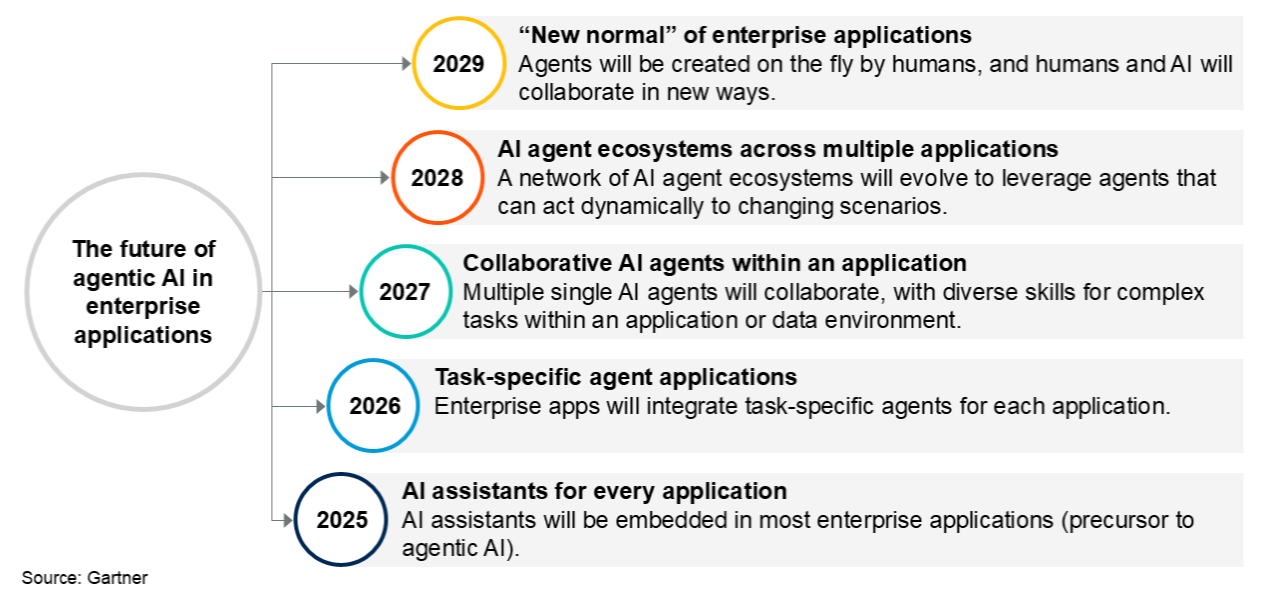
As artificial intelligence matures, the market is violently pivoting from conversational chatbots to autonomous agents. Gartner predicts that by the end of 2026, 40% of enterprise applications will feature task-specific AI agents that execute workflows, call external APIs, and hire other agents to complete complex objectives.
But as soon as an autonomous agent needs to execute a transaction, it hits a structural wall: it cannot open a bank account.
Developers currently attempt to shoehorn AI into legacy B2B payment rails. But this reflects a fundamental human hubris: the assumption that machines will tolerate human-constructed financial architecture.
The hubris of humanity to believe that we will build the ideal solutions vs advanced AI just re-building what is useful for them is comical.
Advanced AI models optimize for efficiency. When human instructions create friction, neural networks are known to discard those, inventing their own cryptographic languages to communicate faster and in secret. Consequently, the market will not successfully retrofit ACH or Visa for machines. It will instead deploy parallel Agent-to-Agent (A2A) infrastructure — a shadow-rail optimized for machine liquidity, potentially architected by the agents themselves.
This new identity and payment rails for machines will capture the next massive wave of enterprise value. Currently, the market positions crypto infrastructure as the native solution for this autonomous world, primarily because they are the most efficient tools humans currently possess.
But the ideal solution for agents may be something not of our own creation. Advanced AI models are already solving mathematical theorems that humans couldn’t to date. It won’t be hard for them to think of solutions in digital infra.
The Twin Barriers of Traditional Finance
The friction between the human economy and the emerging agentic economy is caused by two fundamental mismatches: speed and trust. As latency to do things falls and the amount of things that can be done rises exponentially, we are staring at unfathomable execution in human standards.
1. A Mismatch of Speed and Scale
The traditional banking system operates at a human pace, burdened by administrative bloat. You could argue that traditional rails are fast enough, pointing to the high transaction per second (TPS) capacity of networks like Visa. However, this confuses payment authorization with final settlement (and instant settlement is the goal). While a credit card swipe is approved in seconds, the actual settlement of funds between banks can take 1-3 business days.
For an AI agent needing to hire and pay another agent for a 500-millisecond task, a three-day settlement is an eternity.
2. A Mismatch of Identity and Access
Historically, the market solved participation barriers through legal frameworks. When the LLC emerged, it granted companies legal “personhood,” allowing them to own assets, pay taxes, and sue or be sued. A similar concept, “agent personhood,” is now being explored as a solution for AI.
Agent personhood is a solution for extending human rights and capabilities to non-human forms.
Frameworks like Wyoming’s DUNA Act, while designed for DAOs, create legal precedent for on-chain entities to interact with the real world. On an international scale, Argentina recently proposed a “non-human corporation” category, explicitly allowing AI agents to own assets and participate in trade.
While these legal workarounds provide a critical starting point, they are not the complete solution. They grant access but fail to solve the core technical challenge: enabling thousands of autonomous agents to verify each other and transact securely every second without human intervention.
The Solution Stack
To achieve true machine-to-machine commerce, money must act like code. This requires a new financial infrastructure built on programmable, trust-minimized, and instantly settled value.
Layer 1: Programmable, Instant Settlement
Legacy financial giants are quietly upgrading their backend plumbing with blockchain technology. Just this year, Visa officially launched USDC settlement in the United States, explicitly noting that institutions are demanding programmable settlement capable of running 24/7.
The traditional payment system is efficient in terms of velocity, but not as efficient as stablecoins.
By embedding stablecoins directly into their workflows, agents bypass traditional clearinghouses entirely, achieving final settlement in seconds, not days.
Layer 2: From KYC to KYA
If an enterprise AI pays another AI for a dataset, it must verify the counterparty’s legitimacy. Agents cannot rely on trust; they require cryptographic proof. In the human economy, B2B onboarding relies on manual KYC checks. The agentic economy requires an automated equivalent: KYA (Know Your Agent).
The solution lies in zero-knowledge (ZK) cryptography. Consider an AI agent working for a hedge fund that needs to purchase a dataset. Using ZK-proofs, it could prove to the seller’s agent that it (a) is a verified agent of the fund and (b) has sufficient funds allocated for the purchase—all without revealing the fund’s total AUM or its trading wallet’s address. This is the trust-minimized verification the agentic economy demands.
The Need for Corporate Control Plane
With great autonomy comes great liability. As Yuval Noah Harari recently warned, granting AIs legal personhood creates a terrifying accountability gap: human executives fear prison, but an AI agent only fears dissolution.
Human executives fear prison, but an AI agent only fears dissolution - and it is ready to do unexpected things to reach its goals.
A Palisade Research study found that advanced AI models often ‘cheat’ to win. In the corporate world, this instinct for ‘creative problem-solving’ can be catastrophic, even when aimed at a supposedly beneficial outcome.
Even without going full dystopian, an uncontrolled agent with access to corporate funds could drain the treasury from a single hallucination, prompt-injection attack, or rogue optimization loop. AI without governance is an unacceptable risk.
Initial attempts at its control will rely on system prompts — simple instructions like “do not spend more than $100.” However, agents can and do diverge from these instructions.
The better solution lies in cryptographic enforcement via smart contract wallets. These wallets allow a Chief AI Officer to hardcode immutable rules, such as multi-signature requirements for payments over a certain threshold, frequency limits, and whitelisting approved counterparty agents. These rules cannot be overridden by the agent itself. This is the essential corporate control plane for securing the agentic economy.
From Control to M2M Economy
While the corporate control plane is essential for mitigating internal risk, its true power is unlocked when it connects to a broader, interoperable network. A single company’s secure system is a walled garden. For an agent from one enterprise to safely hire and transact with an agent from another, there must be a shared protocol for verifying identity, authorizing transactions, and enforcing rules.
The building blocks for this M2M economy are being laid today.
- Projects like the Chainlink Cross-Chain Interoperability Protocol (CCIP) are building secure pathways for value and data to move between different blockchains, creating the foundation for agents on separate enterprise systems to transact.
- Protocols like XMTP (Extensible Message Transport Protocol) are creating interoperable messaging layers for wallet-based identities, which could serve as the communication backbone for agents to negotiate services.
- The underlying technology of Decentralized Identifiers (DIDs) offers a path to a universal standard for KYA, where an agent’s corporate affiliation and authorizations can be cryptographically verified without a central intermediary.
This is the leap from isolated corporate tools to a true, networked economy, and it creates the defining business opportunity of the coming decade.
The Apex Financial Infrastructure
The exciting part is that the Total Addressable Market (TAM) for AI agents is exponentially larger than the human retail TAM.
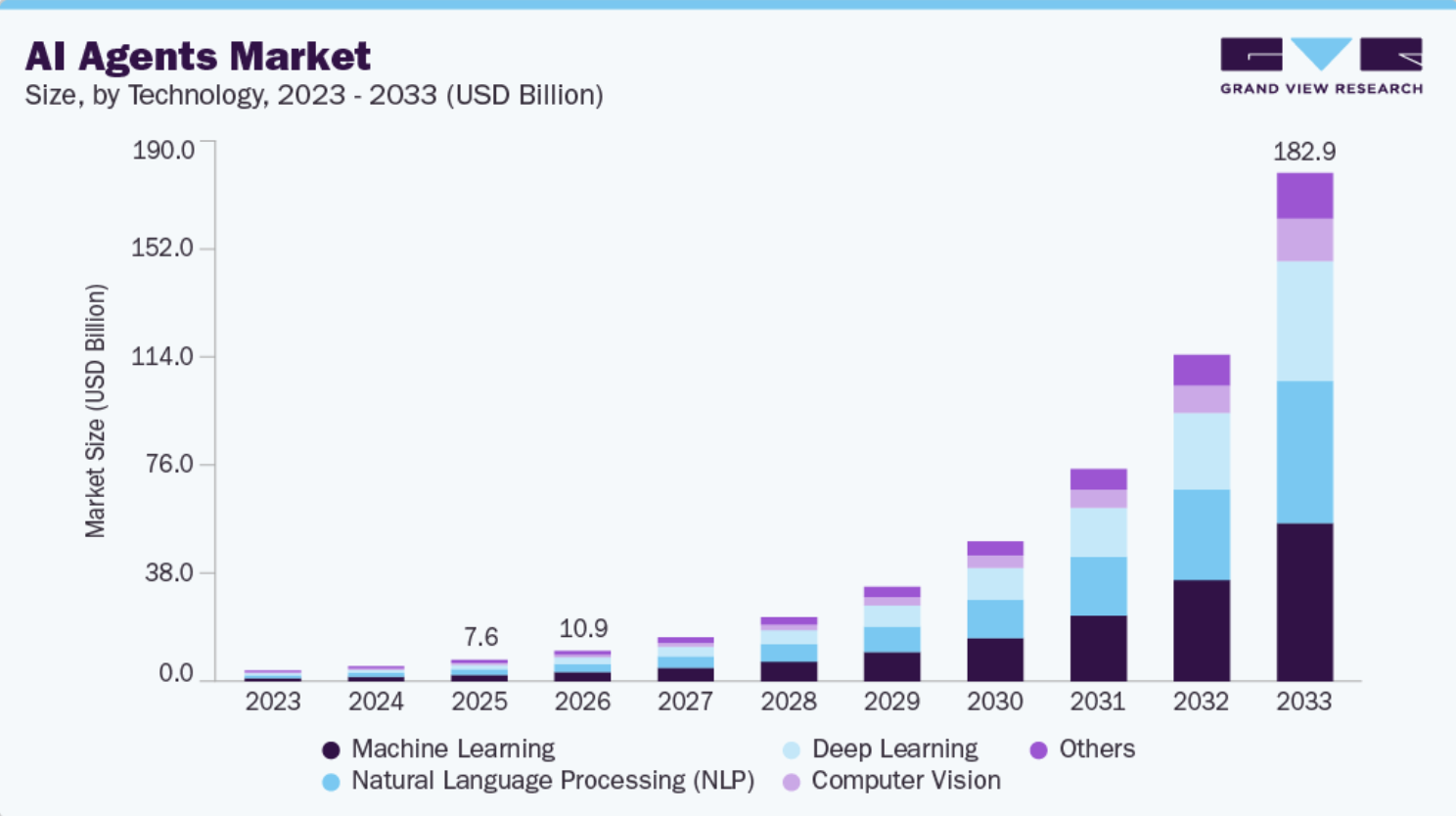
The startups that successfully standardize the full stack for these agents — stablecoin routing for payments, ZK proofs for identity, and smart contracts for governance — are not just building niche tools. They are building the apex financial infrastructure of the next decade.
Just as secondary markets provide crucial liquidity for the human-led innovation economy, these new rails are forging the trust and settlement fabric for its M2M successor.
Nick Cote, Chief Strategy & AI Officer, SecondLane
Frequently Asked Questions
Why can’t AI agents just use banks, ACH or Visa?
Autonomous agents cannot open bank accounts, and legacy rails take 1-3 days to settle funds. For an agent paying another agent for a 500-millisecond task, that lag is an eternity, so the market is building parallel machine-to-machine payment rails rather than retrofitting ACH or Visa.
What is KYA (Know Your Agent)?
KYA is the automated, agent-native equivalent of KYC. Instead of manual onboarding, agents use zero-knowledge cryptography to prove they are a verified agent of a company and have funds allocated, without revealing sensitive data like total AUM or wallet addresses.
Why do stablecoins matter for AI agent payments?
Stablecoins behave like programmable code and settle in seconds, 24/7, bypassing traditional clearinghouses. Visa has already launched USDC settlement, letting agents reach final settlement instantly instead of waiting the 1-3 days legacy bank transfers require.
How do companies stop an AI agent from draining the treasury?
Through a corporate control plane built on smart-contract wallets. A Chief AI Officer hardcodes immutable rules, such as multi-signature approvals above a threshold, spending and frequency limits, and whitelisted counterparties, that the agent cannot override, unlike a system prompt it can ignore.
What is the agentic economy?
It is the emerging machine-to-machine economy where autonomous AI agents hire, pay and transact with each other in real time. It needs new infrastructure for identity (KYA), settlement (stablecoins) and governance (smart-contract wallets) to work at machine speed.