

How to get the best deals from the 5 pools of private liquidity
In public markets, liquidity is anonymous. In private markets, who is selling matters as much as what they are selling.
Liquidity in Web3 and private equity is a series of disconnected pools. To negotiate deals or to structure a liquidity program that doesn’t crash your market, you have to understand the five sources of supply.
Each pool has different drivers and pain points, which require different negotiation levers. Let’s look at five main sources of private market liquidity and their ins and outs.
1. The Foundations
In traditional equity, companies often sell treasury shares to raise capital. In crypto, the foundation model takes this a step further. The foundation (or treasury) is often an offshore entity, legally air-gapped from the operating company, tasked with growing the ecosystem.
The motivation:
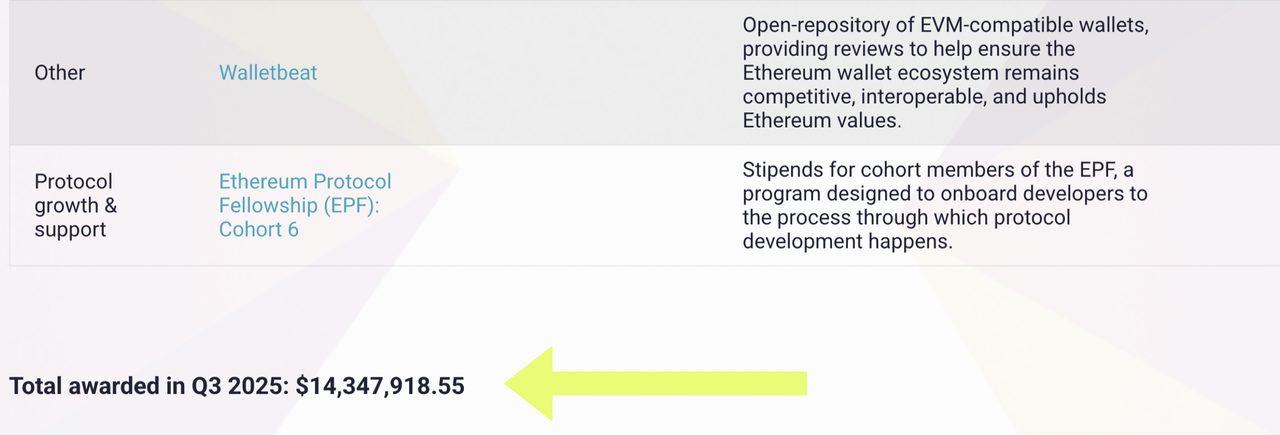
Foundations sell to fund grants, pay core developers, or bootstrap liquidity for new protocols. When they’re selling, it is not for profit; they’re converting tokens into the stables or fiat required to keep the lights on.
The Ethereum Foundation is the prime example. When they sell large blocks of ETH, X panics.
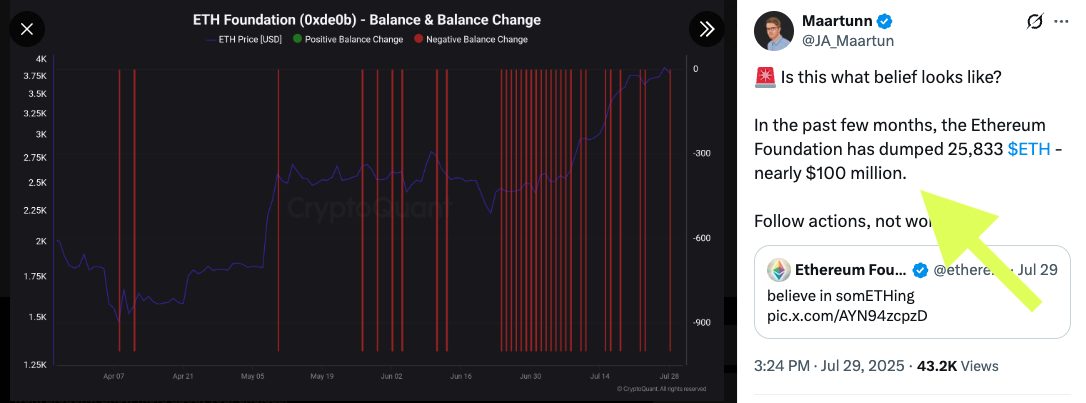
But their reports reveal that those sales fund millions of dollars in annual grants for ecosystem programs and core research.
The strategy:
This is the lowest-risk supply you can buy. Why? Because the issuer controls the transfer switch. If you are buying directly from the foundation, you have implicit approval. You eliminate the risk of the transaction being voided or the tokens being blacklisted.
- Pro tip: Focus on strategic value. Foundations aren’t interested in the highest bid, but in partners who will hold tokens and participate in the network.
2. The Investors
Right now, this is the deepest pool of liquidity in the market. Venture funds from the 2015-2017 vintages are nearing the end of their 10-year lifecycles, and their LPs are demanding cash. This makes VCs pour out the sales proposals to get the money for the payouts.
The motivation:
VCs aren’t always selling because they’ve lost conviction. Often, they are selling their winning assets to lock in a profit, or they are offloading positions simply because their fund mandate requires them to wind down. It’s easy to forget that VC at its core is a business that needs to make money in order to sustain itself.
The pressure in 2025 is undeniable. PitchBook’s 2026 Private Capital Outlook reports that Europe recorded just 1,021 exits in 2025, which is the lowest total in a decade and a sharp drop from the previous year. LPs are cash-flow negative. They need distributions before they can commit to new funds, forcing GPs to sell whatever they can, whenever they can.

The strategy:
Look at the fund vintage. If a VC approaches you to sell a position, check when their fund launched. If it’s a 2016 or 2017 vintage, they are likely under immense pressure to show DPI. That is your leverage.
- Pro tip: Sometimes VCs sell because they have information rights and see bad data coming. Always cross-reference VC sales with on-chain activity and developer retention metrics to get a better understanding of their motivations for the sale.
3. The Founders
Founder liquidity is the most sensitive topic in the industry. In crypto and high-growth tech, the market views the founder as the captain of the ship, and if they sell their share, the community assumes the ship is sinking.
The motivation:
Wealth realization. A founder might have $100M in paper net worth but struggle to pay their mortgage.
The strategy:
Founders’ sales need to be destigmatized. If a founder has built a profitable protocol with real usage, taking a few chips off the table is sound financial planning. Even Vitalik Buterin faces pressure, frequently having to clarify that his sales are for funding R&D, not buying yachts. In traditional equities, CEOs use 10b5-1 plans to sell on a schedule without panic. In Web3, we lack this standardization, so every founder sale feels like a fire alarm.
However, context is everything. Selling into strength (protocol growing, revenue up) via a controlled OTC block is a green flag. The red flag is selling into weakness, with the roadmap stalled and the founder offloading aggressively.
- Pro tip: Founders care about who replaces them, as they want long-term aligned capital. Positioning yourself as a holder who adds value can win you a discount over a purely financial bidder.
4. The Employees
Historically, employee sales were taboo, viewed as treason. That narrative is dead. Today, clever liquidity strategies for the employees is a powerful talent retention tool.
The motivation:
Life happens. Employees need to pay for weddings, cover taxes, and get their kids braces. If you block them from selling, they may leave to join a company that allows it, or worse, sign forward agreements that mess up your cap table.
Look at SpaceX. They have stayed private for over 20 years, yet they have high retention. How? They run bi-annual tender offers, giving employees a liquidity window every six months.
The strategy:
This pool is the most fragmented. Employees often don’t know the fair market value of their shares and risk falling to predatory bids. Furthermore, employees usually hold Common Stock, whereas investors may hold Preferred Stock. These share classes have different liquidity rights and priorities in the capital stack, complicating the pricing model.
- Pro tip: See if there is a way to get the company to organize a structured tender offer. By aggregating employee supply into one block, the company can fetch a much better price for its team and control who ends up on the cap table.
5. The Advisors
This is the hardest pool to source because companies don’t always publicly announce who their advisors are. You don’t know who owns what until they try to sell.
The motivation:
Pure ROI. Advisors are rarely emotionally attached to the “mission”. In many cases, they treat their equity as a fee for services rendered. When they see the right moment, they cash out.
The strategy:
Advisors are often the most rational sellers who understand market cycles. However, because their allocations are smaller, they are often ignored — an institutional buyer isn’t going to pass compliance to buy a $25,000 slice of equity. It’s inefficient. This is why SPV usage has skyrocketed over recent years.
- Pro tip: Aggregating advisor stakes via SPVs is the way to make these deals large enough to be attractive to secondary buyers.

The “Golden Key” to negotiation
Across these distinct pools, there is one universal rule: always align with the issuer.
If you can get the issuer, like the foundation or founder, on board, you unlock the other pools. The issuer can introduce you to early investors who want to exit. They can sanction an employee tender offer. They can verify the advisor’s stakes.
The issuer holds the keys to access, and access is everything on the private market.
Nick Cote, CEO & Co-founder, SecondLane