

Anti-flipper manifesto: is your OTC desk betting against you?
This month, SecondLane co-founder Omar-Shakeeb steps into the role of Chief Executive Officer. After a decade matching parties all over the globe with secondary opportunities, his aim is simple: to prioritize trust. In his first article in the job, he explains why the future of Web3 liquidity depends on scrapping the predatory “principal” model.
____________________
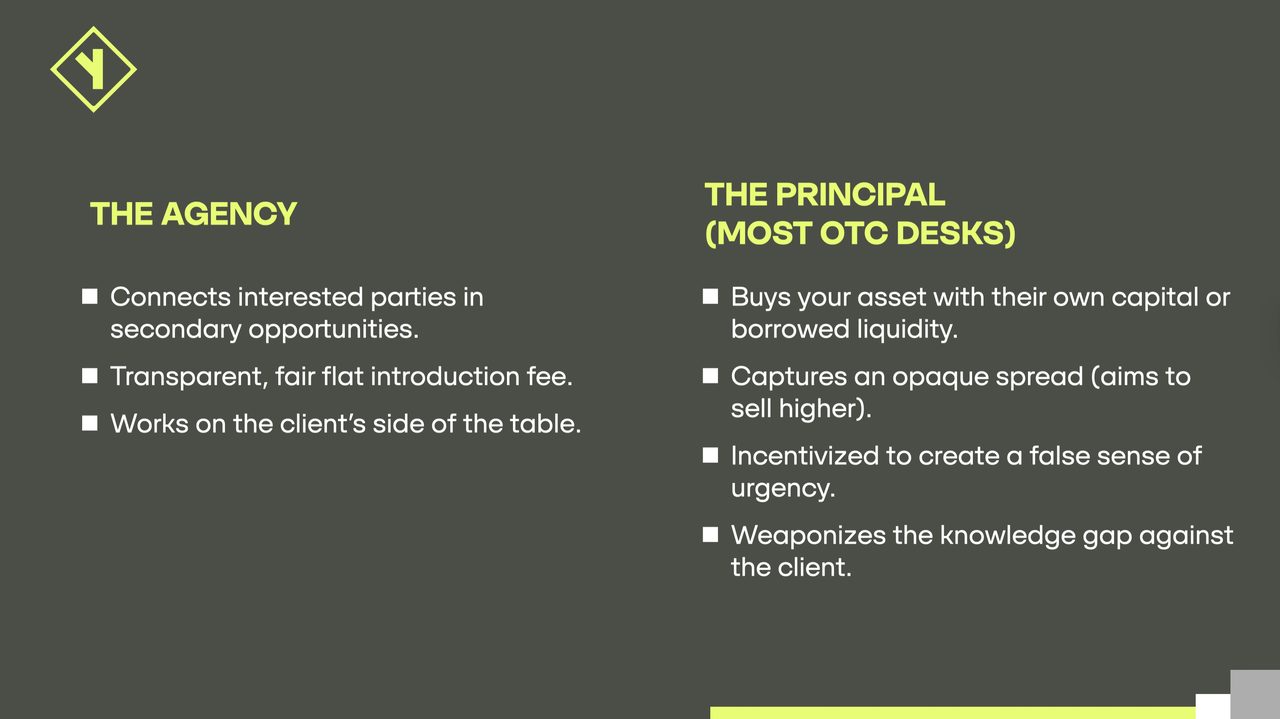
In the financial ecosystem, everything begins with trust. Yet, for the last decade, the crypto secondary market has been dominated by principal traders — the intermediaries who trade against their clients to capture a spread. This model is predatory, opaque, and a liability for any serious institution.
Here is why the industry should bet on the agency model instead.
The House Flipper Problem
Most OTC desks act as principals. They buy your asset with their own capital, aiming to flip it immediately to someone else at a higher price. They weaponize market anxiety, offering 24-hour payouts but demanding 30% discounts because they are “taking the risk.” Because they rely on capturing the spread, they are mathematically betting against you.
As the introduction agency model we do the opposite. We connect interested parties for a transparent flat introduction fee. We are incentivized to get a successful introduction between the parties, working squarely on the client’s side of the table.
As digital assets become a core institutional asset class, fund managers must answer to rigid internal oversight. In professional finance, getting the deal done is insufficient unless you can also prove best execution.
When a fund manager trades with a “flipper,” they cannot verify the true market price so they are paying an “opacity tax”. For a TradFi compliance officer, this destroys price discovery. In an era where secondary volumes are hitting record highs, principal trading is an unacceptable fiduciary risk.
Breaking the Chain of Brokers
Opaque markets breed middlemen. Often, a seller thinks they have found a buyer, but they’ve actually found a broker, who knows a broker, who might know a buyer. By the time five middlemen stack their fees on top of the deal, the valuation is destroyed.
A transparent introduction-based agency kills the middlemen fees.
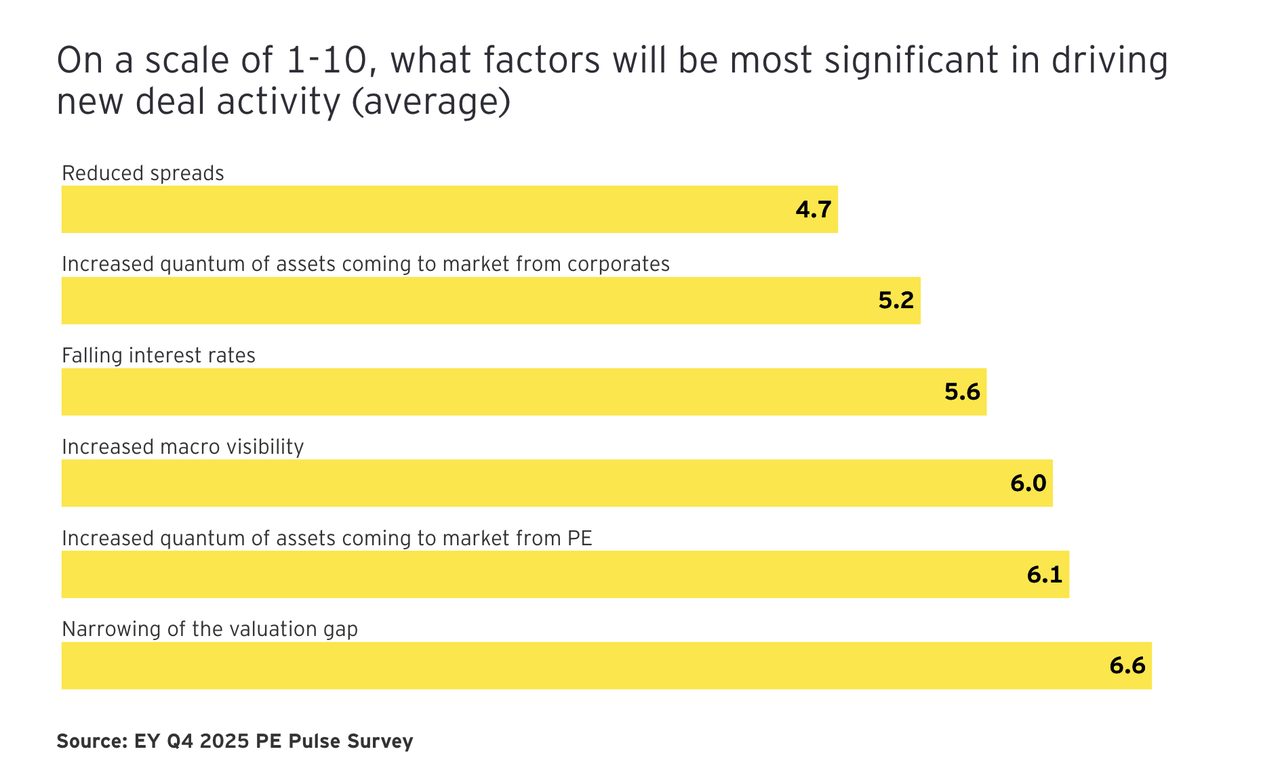
A transparent introduction-based agency kills this chain. You see the bid, the ask, and the fee of the interested parties. As EY’s Private Equity Pulse confirmed, “reduced spreads” and the “narrowing of the valuation gap” are exactly what allows buyers and sellers to align on pricing, restoring confidence and driving a record $905 billion in renewed deal activity.
How Agency Verifies the Deal at Sources
In a market rife with quick fixes, your safest bet is a reliable heritage business rooted in the human capital built over a decade.
Because of how disconnected everything has become, real relationships matter now more than ever. When you trust someone you share information with that person.
Here is what a proper deal background check should look like to ensure safety.
When analyzing a block of equity, a diligent agency firm must kick off a multilevel check that stretches way beyond the PDF in the email. The first step is asking, “What can be shared of the contracts?” They sign an NDA, get the details, and get to work.
The Network Check
The agency must cross-reference the seller against their network of vetted market participants. If a partner has participated in the same round, the validation can be immediate and technical.
A proper check involves pulling up the seller’s SAFT alongside the firm’s own records to see if everything aligns. It requires cross-referencing to ensure that the person on the call is the exact same person who originally signed the deal. Sometimes it comes down to verifying that the DocuSign tags match the original issuance.
The Cap Table Check
Next, the agency must look at the project’s cap table. The most effective due diligence involves reaching out to other investors in that same round to assess the seller’s reputation before a trade is ever considered.
This requires initiating casual conversations with known entities on the cap table on what they think about these guys you invested alongside. They’ll share the good, the bad, or the ugly. If an existing investor is already negative about a seller, it raises an immediate red flag. It signals that the seller is starting ten steps back and needs a very compelling story.
The Foundation Check
Finally, the process must involve the project team directly. Going to the founder is the critical last step to get contracts fully verified.
In a hypothetical LayerZero deal, for example, a firm that invested directly would reach out to the founder without bypassing anything, simply flagging the contract and asking, “Is this legit?”
Access to the project founder is the ultimate verification. What makes it possible? Heritage human capital.
This level of access requires being in the space for over a decade, knowing the founders and the other VCs. It means being able to connect with a certain party to verify a deal within 24 hours, without them asking “why.”
If you are a “Telegram Broker” who popped up six months ago, you simply cannot make that call. You cannot verify the asset, you don’t share a cap table with the seller, and you don’t have the founder’s personal cell phone number. At a reliable agency, that access is the baseline for trust and safety.
The License Becomes a Must-Have
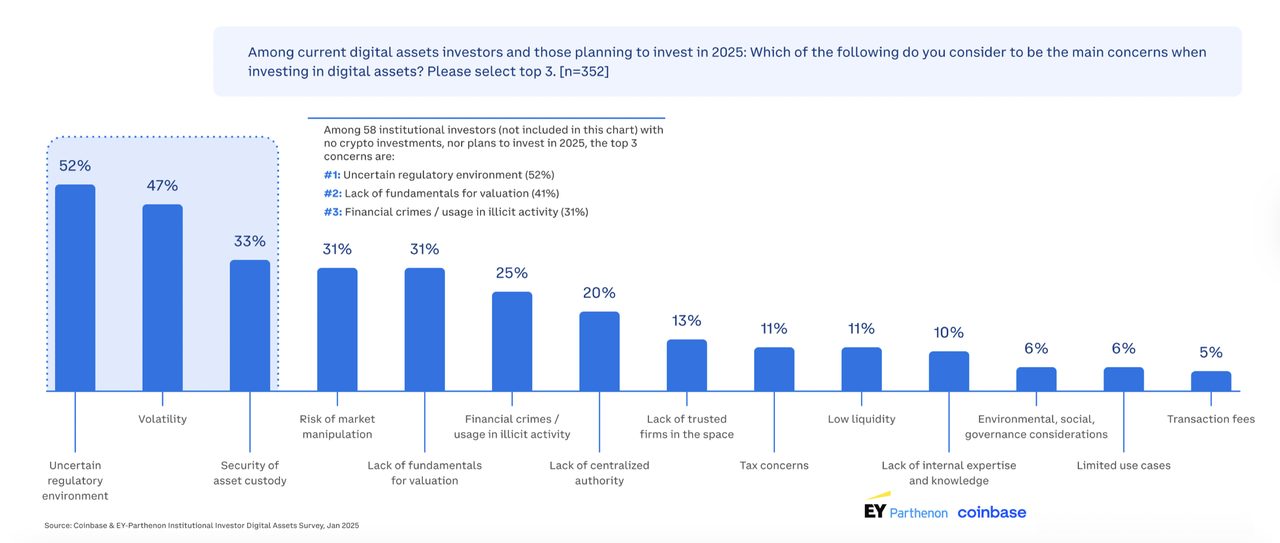
Institutional investors are currently paralyzed by ‘SEC Anxiety’ (EY recently identified ‘uncertain regulatory environment’ as the #1 concern for 52% of institutions). They want to deploy capital, but they are terrified of regulatory blowback.
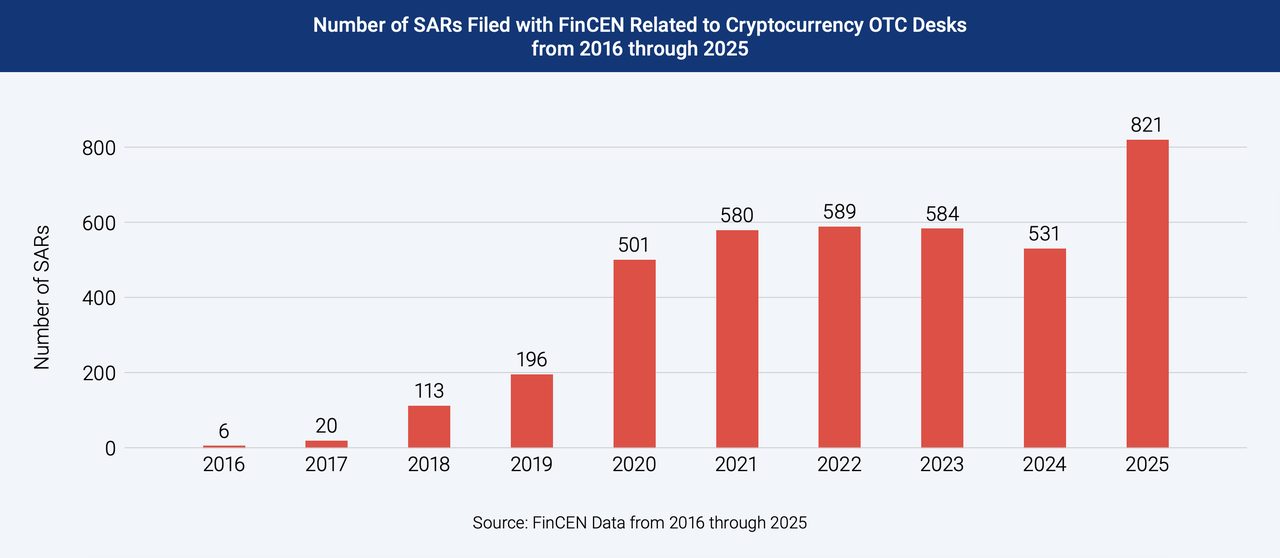
This fear is justified. Just recently, the Joint Chiefs of Global Tax Enforcement (J5) labeled unregulated crypto OTC desks as potential tools for tax fraud. This signals a crackdown on the shadow market following a surge in suspicious activity reports. If your counterparty is a “black box,” you are risking more than losing 5% on the spread — you are risking a federal investigation.
This is why the market requires infrastructure operated through a US Broker-Dealer license with SEC issuance.
For an institutional buyer, a license is a shield. It means the agency is held to a fiduciary standard that a Telegram channel is not. It means settlement flows done via regulated custodians like BitGo or Anchorage ensure that assets and funds never sit in limbo.
The Future is Institutional
We have seen that agency structure works. We witnessed firsthand how complex liquidations, such as bundling millions in tokens from small sellers for regulated funds, succeed because the agency bridged the gap between the crypto frontier and Wall Street through transparency rather than arbitrage.
As CEO, my goal is to lead us into a regulated framework, building the investment banking standards of the digital era.
The last cycle was predatory. The next is transparency and regulation. It is time to stop betting against your broker.
Omar-Shakeeb Zahir, CEO & Co-Founder SecondLane
Certain statements contained in this article may constitute forward-looking statements, including statements regarding regulatory status, licensing processes, and anticipated timelines. Such statements are based on current expectations and assumptions and are subject to change. SecondLane operates in accordance with applicable laws and regulatory frameworks in the jurisdictions in which it conducts its activities. SecondLane provides introduction and information services only. SecondLane does not act as a broker-dealer, placement agent, investment adviser, or financial intermediary, and does not solicit, negotiate, or facilitate the purchase or sale of securities or other financial instruments. Recipients of this communication are responsible for conducting their own independent evaluation and should consult their own legal, financial, and tax advisers before making any investment.