

Your AI-fication might need more humans
The narrative that AI immediately reduces headcount is a corporate myth to soothe nervous shareholders. The pace of model updates, token burn, and the necessity of internal governance mean legacy companies must increase strategic headcount to orchestrate the transition — or risk capital destruction.
TL;DR
- Corporate America believes buying AI licenses allows them to immediately slash headcount and double operating margins.
- However, the transition from a labor-intensive firm to a compute-intensive firm expands your payroll. You cannot automate a workforce until you hire the architects to build the workflows.
- Untrained employees mandated to use AI without governance are burning API tokens on the wrong models, turning promised efficiency into escalating expenses.
- 76% of enterprises have now hired a Chief AI Officer. AI leadership compensation has exploded, but paying this toll prevents unmanaged cloud spend.
- The Investor Takeaway: If a portfolio company claims to be undergoing an AI transformation but their payroll doesn’t show a surge in workflow orchestrators and a control plane, they are faking it. Price them as a cash incinerator.
The $700 Billion Mirage
Buying 500 ChatGPT enterprise licenses, firing half your back office, and expecting operating margins to double is a collective delusion currently plaguing corporate America.
The macro numbers are already exposing the fantasy. A February 2026 Goldman Sachs report noted that $700 billion poured into AI investment delivered “basically zero” to U.S. GDP growth. (Source) Why? Because 90% of IT leaders can’t prove or explain the ROI of their AI implementations due to fragmented data and a lack of governance[1].
The corporate world is learning an expensive lesson: AI integration is a leadership and training problem. According to Riviera Partners’ 2026 AI Hiring Blueprint, only 2% of companies were ready for AI in 2025. The rest simply bought tools, mandated usage, and prayed for productivity.
If a company spends $10,000 procuring AI tools and nobody uses them correctly, there is no ROI.
When you skip the structural readiness phase, you get chaos.


If you look at the math of enterprise AI integration, transitioning from a labor-intensive firm to a compute-intensive firm initially inflates your payroll. To build an automated back office, you must first hire the architects. And those architects are expensive. Before you start modeling your future margins, you need to face the truth about the AI talent race:
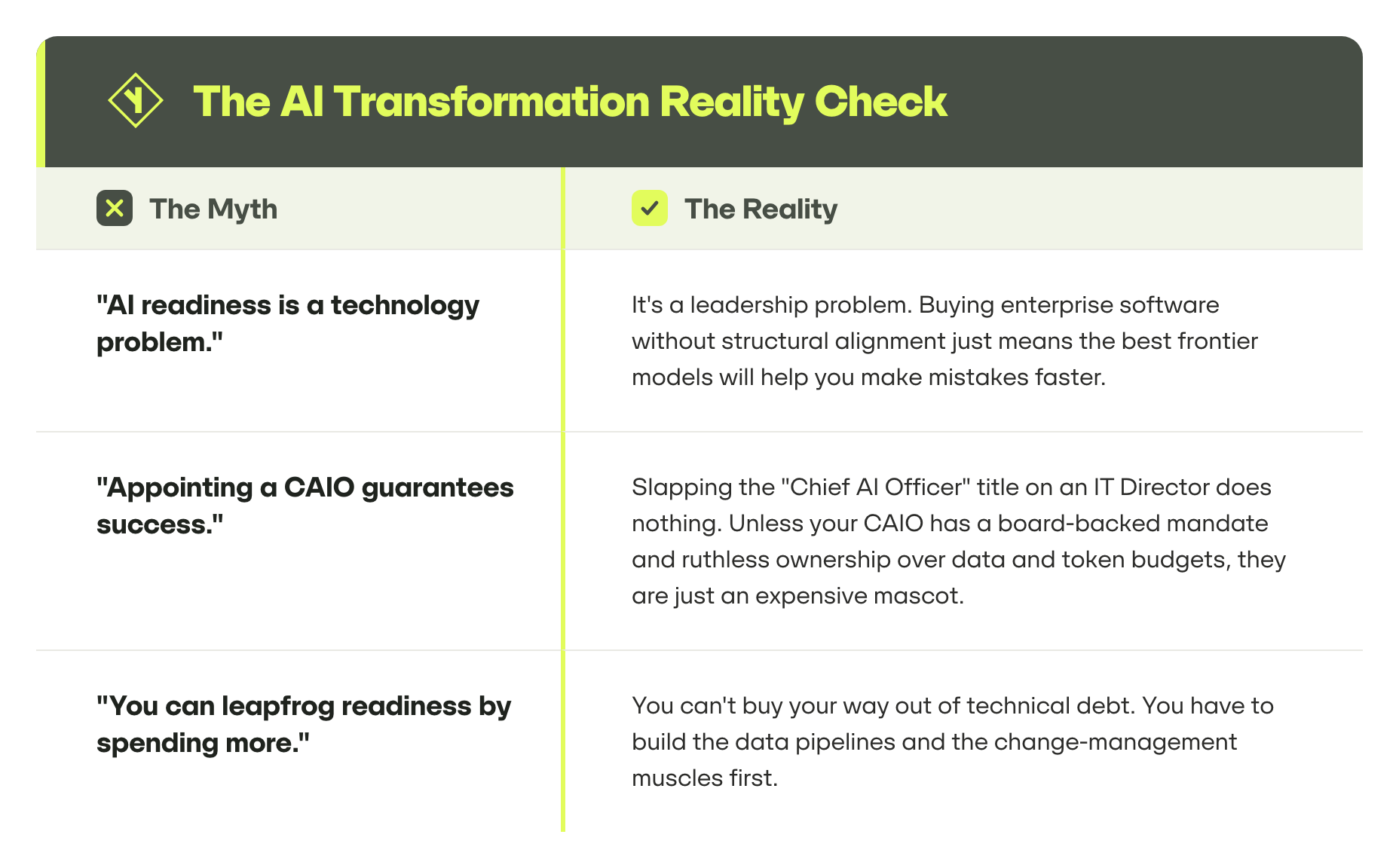
That last point is where most businesses bleed out. You cannot shrink your payroll until you temporarily inflate it.
The Interim Inflation, Or Hire Before You Fire
You cannot replace your workforce until your workforce builds the automated workflows. In turn, your workforce needs to be taught how to build those workflows correctly.
Becoming an autonomous organization requires groundwork. We know this firsthand from mapping workflows at SecondLane. The manual work of mapping data silos, defining success metrics, and writing meta-prompts must take place before you can enjoy the fruits of purely digital labor. Unless those three things are happening, you’re not going to be able to replace a single human being.
IBM’s 2026 CEO Study backs this up with their directive to executives: Redesign workflows before redesigning jobs. You cannot fund reskilling or reduce headcount until a redesigned way of working is mapped out and backed by an AI-first culture ready to absorb it.
Freezing or reducing headcount requires an upfront surge in human capital. In this interim period, companies must hire “translators” — specialists who can bridge the gap between AI strategy and commercial impact.
But when you actually hire the right engineers to build the workflows, the results are effective.


This is what actual ROI looks like when you hire the right humans to build the architecture.
The Corporate Panic and Token Burn
When executives try to skip the interim human phase, they trigger a corporate panic that torches expenses.
Managers mandate AI usage and tie it to employee KPIs. Untrained employees panic, grab the most expensive frontier model, and start burning API tokens like there’s no tomorrow.
The math here is unforgiving. We recently ran an internal workflow where we burned 6.6 million tokens on an optimized model. Total cost? $8. Accidentally running that exact same workload on a premium, branded model (like Opus 4.6 Fast) would cost over $200 — 25x more for the same quality of work.

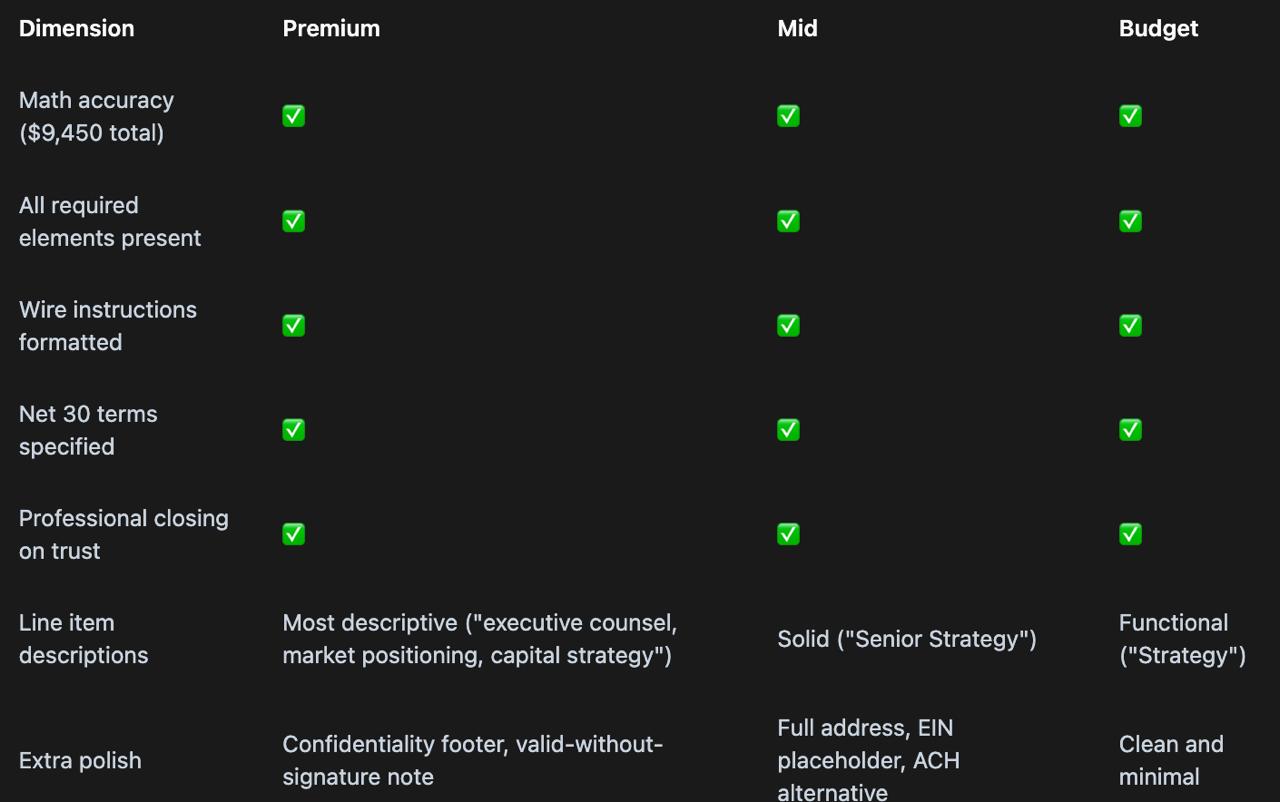
Without a specialized human to govern model routing, your team defaults to using a Ferrari to plow a field.

Without governance and an internal champion managing permissions and training, you are simply paying a premium in token burn so your workers can generate bloated emails.
The CAIO Tax
To stop the bleeding, companies are institutionalizing AI governance at the C-suite level. According to the IBM 2026 CEO Study, 76% of organizations now employ a Chief AI Officer (CAIO), a massive jump from 26% in 2025.
But slapping a new title on an existing executive doesn’t work on its own. The role requires authority to redesign workflows and set funding gates. Acquiring this talent requires severe CapEx allocation.


Riviera Partners’ 2026 compensation data reveals that AI leaders are commanding a premium over traditional tech executives. At public companies, AI leaders responsible for governance are routinely crossing $1 million in annual cash compensation, with equity values nearing $30 million. In Private Equity-backed firms, compensation tied to AI-driven EBITDA improvements is resulting in pay packages north of $20 million.
You pay the CAIO toll today to plan the architecture, or you pay it tomorrow in runaway cloud bills and failed implementations.
So What?
Do not reward portfolio companies for buying AI subscriptions while boasting about headcount reductions.
An “AI-first” company without an AI governance team is a cash incinerator. Price it accordingly.
True readiness requires an influx of data architects, integration specialists, and a dedicated AI control plane. Companies claiming to undergo an AI transformation without them are faking it.
Look at their hiring data. Look at their internal token budgets. If they aren’t hiring the humans required to build the machines, they are going to get run over by the companies that did.
Nick Cote, Chief AI Strategy Officer & Co-Founder, SecondLane